
Explore solar.
On-Grid vs Hybrid Solar: Choose for Bills and Power Cuts
Understand grid-tie solar, hybrid backup, battery capacity and quotation scope before choosing a home solar system in India.
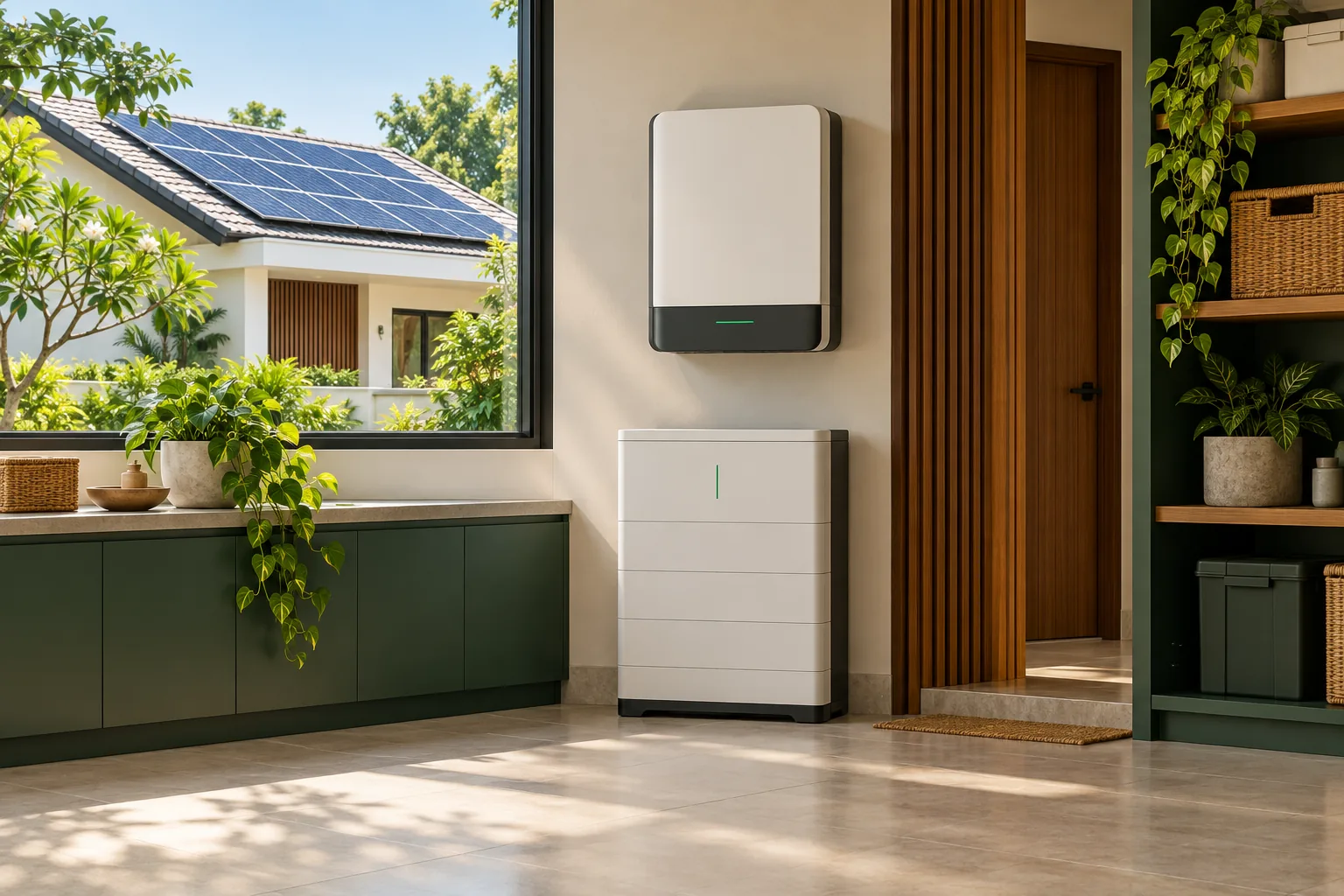
The important question in an on-grid versus hybrid quotation is what will happen when the electricity goes off. A system can reduce daytime grid consumption and still leave the home without power during an outage. If the salesperson says “hybrid”, ask which circuits keep running, at what power and for how long.
Start with two separate objectives: saving on purchased electricity and maintaining essential supply. Write them at the top of your quotation comparison. This keeps a cheaper bill-saving offer from being compared as if it includes the same service as a properly designed backup system.
What ordinary on-grid solar does
A conventional grid-tie system converts solar electricity for use alongside the public network. Its grid-dependent operation is different from having an independent supply. Do not assume it will keep supplying your house after the grid fails. Any claimed outage mode needs an explicit, supported design.
For a household with reliable supply and useful daytime loads, a grid-connected design may address the main objective without battery storage. Its financial result still depends on generation, direct consumption, local export treatment and the full installed cost. A generic percentage saving cannot settle those inputs.
What the hybrid label leaves unanswered
A hybrid product can support energy storage, but the actual functions depend on the model, battery, switching arrangement and configuration. Some designs back up selected circuits; others support a broader load group. The rating on the front of an inverter does not automatically mean every appliance can run together in backup mode.
Fronius's operating instructions are a useful concrete example: their backup arrangements distinguish a limited output from a fuller backup design, specify supported circuits and require suitable switching. This illustrates why you should request the exact manual and supported-battery list. It is not a recommendation to buy that brand or an assurance that a particular model suits your Indian connection.
Separate power from stored energy
Imagine essential loads averaging 400 W for four hours. Their delivered energy requirement is 1.6 kWh. That arithmetic is only a starting point. Battery sizing must account for permitted depth of discharge, conversion losses, minimum reserve, temperature, ageing and the manufacturer's operating limits.
Power is a separate constraint. A battery with enough stored energy may still be unable to supply the simultaneous load or a motor's starting demand. Ask the designer to show the continuous and surge limits for the inverter and battery together. Do not choose storage by comparing headline kWh alone.
Get the outage demonstration into the handover
Ask whether switching is automatic or manual, whether supply is interrupted during changeover, and what happens if the battery reaches its reserve at night. Identify the backed-up circuits on the written plan. A laptop, refrigerator and pump do not have identical tolerance for interruption or startup requirements.
An installer should demonstrate the approved operating modes and explain the manufacturer's shutdown and emergency instructions. Owners should not experiment with bridges, changeover wiring or improvised isolation to force a grid-tie system to run during an outage. Electrical configuration and grid isolation are professional work.
Compare two complete scopes
Put panel capacity and model, inverter AC rating, battery model and usable energy, switching equipment, protection, earthing, installation, monitoring and warranties into the comparison. Ask which costs are excluded, who handles approvals, and how a later battery addition would work. “Battery ready” is not a fixed-price commitment for future storage.
Also compare support: response area, warranty handling, service charges and the person responsible when the inverter and battery suppliers blame each other. A cheaper box can become an expensive system if commissioning or compatibility is missing from the quote.
A practical decision for your home
If outages are uncommon and your main aim is reducing imported electricity, start by examining a suitable grid-connected quotation. If essential backup matters, ask for a hybrid design around a specific load list and duration. Consider an existing separate backup arrangement as part of the site discussion rather than discarding it automatically.
Use the electricity-savings and payback calculators only with the actual financial scope. Keep the value you place on backup separate from modelled bill savings. That makes the choice clearer even when the quotation with the lowest simple payback does not provide the service your family needs.
Sources and editorial notes
- Fronius Primo GEN24 operating instructions: operating modes and backup limits
- NDMC rooftop solar FAQs: generation and roof area; local rules are not national rules
Research checked 16 October 2026. Calculations are illustrative assumptions, not a site assessment, guaranteed output or quotation. Equipment examples describe functions, not endorsements. Illustration created with AI; it does not show a Solarower installation.